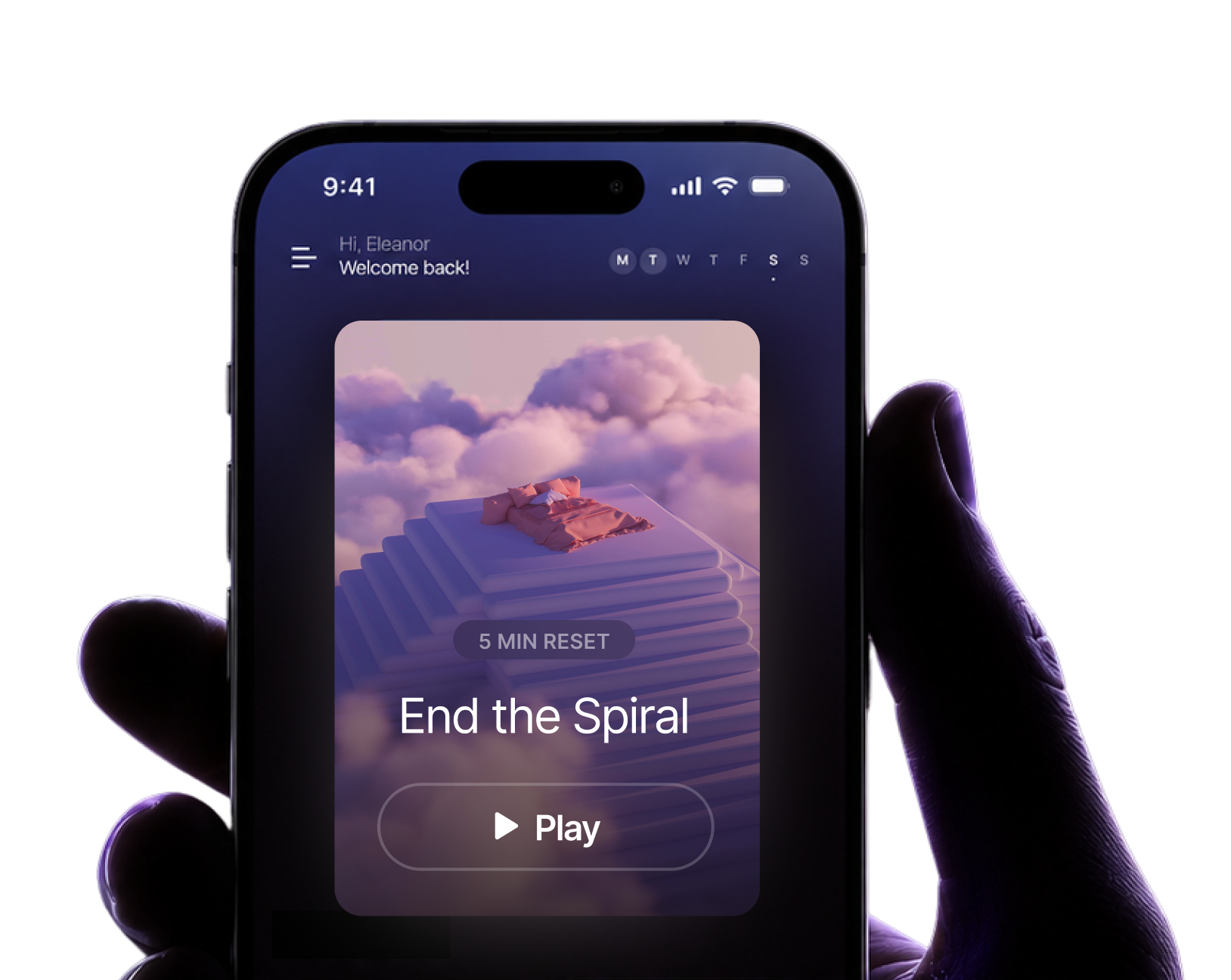

You pick up your phone to check one message. Ten minutes later, you're still thinking about what the person meant by their reply. You read it again, wonder whether you said something wrong, and start imagining a conversation that hasn't even happened.
Or maybe it's late at night. You're tired, but your mind has other plans. There's tomorrow's work, a decision you made last week, and something embarrassing you said years ago that has suddenly returned for no apparent reason.
When this happens often enough, you might start searching for an app to help with overthinking.
There are plenty of mental wellness apps available, but choosing one can become another thing to overthink. Should you try meditation? Would journaling help? Is mood tracking useful, or will it just give you more to analyze?
The answer depends on what you're experiencing and what kind of support feels comfortable.
A good overthinking app doesn't need to offer hundreds of features or promise to change your life overnight. It should give you a practical way to understand your thoughts, take a break from repetitive thinking, and build habits that fit into your everyday routine.
Why People Look for an App to Help With Overthinking
Overthinking doesn't always look like worrying about something serious. Sometimes it's spending half an hour deciding how to respond to a simple message. Sometimes it's questioning a decision you've already made, even though there's nothing more you can do about it.
You might replay conversations, prepare for situations that haven't happened, or struggle to relax because your mind keeps jumping between unfinished tasks.
Thinking things through is useful. It helps us make decisions and understand experiences. But when you keep returning to the same concern without learning anything new, thinking can become exhausting.
This is where a meditation or mental wellness app may offer some support.
An app can't make difficult decisions for you or prevent uncomfortable thoughts from appearing. What it can do is provide a place to practice responding to those thoughts differently.
For some people, that means listening to a guided meditation instead of spending another twenty minutes worrying. For others, it means writing down a concern so they can understand what's actually bothering them.
The most useful app is often the one that makes these small practices easier to return to.
What Should You Look for in an Overthinking App?
If you've searched for the best app for overthinking, you've probably seen plenty of promises about relaxation, mindfulness, better sleep, and emotional well-being.
Those features can sound appealing, but they don't all serve the same purpose.
Before downloading anything, consider what usually happens when you start overthinking.
Do you struggle to settle your mind before bed? Do you keep questioning your decisions? Are you constantly worrying about how other people perceive you? Or do you sometimes feel overwhelmed without understanding why?
Your answer can help you decide which features are worth looking for.
Guided Meditation That Doesn't Expect You to Clear Your Mind
One of the biggest misconceptions about meditation is that you're supposed to stop thinking.
If you've ever tried sitting quietly while your mind jumps between a dozen different subjects, you already know how frustrating that expectation can be.
Meditation is less about forcing your thoughts to disappear and more about learning to notice them without following every one.
Imagine you're worried about a meeting tomorrow. You start thinking about what you'll say, what could go wrong, and how someone might react.
During a guided meditation, you might notice that your attention has moved toward the meeting. Rather than continuing to plan the entire conversation, you return your attention to the practice.
A minute later, the same thought might come back.
That's fine. You return again.
Guided meditation can make this process feel more approachable because you have instructions to follow instead of trying to figure everything out yourself.
When choosing a meditation app for overthinking, look for sessions that feel manageable. A short practice you actually use can be more valuable than a long session you keep putting off.
Journaling When Your Thoughts Feel Tangled
Sometimes you don't want to sit quietly with your thoughts. You want to understand them.
Perhaps you've been feeling uneasy all afternoon because of something someone said at work. You keep replaying the conversation, but the more you think about it, the less certain you become about what actually happened.
Writing can help you put some distance between the situation and your interpretation of it.
You might write:
"I'm worried my colleague was annoyed with me."
Then ask yourself what led you to that conclusion.
Did they say something directly? Were they unusually quiet? Could there be another explanation?
You don't need to write several pages or turn the experience into a major exercise. Sometimes a few sentences are enough to reveal that you've been treating an assumption as a fact.
Journaling can also be useful when your mind feels crowded with unrelated concerns. Putting those thoughts somewhere outside your head may make them easier to organise.
If this sounds helpful, look for an app that makes journaling feel simple rather than something you have to do perfectly.
Mood Tracking to Notice What's Happening Over Time
Have you ever had a difficult week but struggled to explain why?
You might remember feeling anxious on Tuesday or unusually frustrated on Thursday, but the rest of the week blends together.
Mood tracking gives you a way to look back at how you've been feeling.
Over time, you may begin noticing patterns. Perhaps your mood tends to dip after particularly demanding workdays. Maybe you feel more unsettled when you've had several nights of poor sleep.
These observations don't necessarily tell you what caused a change in mood, but they can help you understand which experiences deserve more attention.
For someone who overthinks, mood tracking may be especially useful when it encourages curiosity rather than constant self-analysis.
You don't need to monitor every emotional change throughout the day. A brief check-in can be enough.
A Routine You Can Follow Without Overcomplicating It
Downloading a new app often feels motivating at first.
You tell yourself you'll meditate every morning, write in your journal every evening, and become more consistent with your well-being routine.
Then work gets busy. You miss a day, followed by another, and suddenly the app becomes something you feel guilty about not using.
This is why structure matters, but so does flexibility.
Some people enjoy choosing a different meditation or journaling activity every day. Others prefer following a structured program so they don't have to decide what to do next.
Multi-day programs can be useful if you want a sense of direction and a routine to return to.
The important thing is finding something that fits your actual schedule.
A wellness routine shouldn't become another reason to criticize yourself.
Can One App Combine Meditation, Journaling, and Mood Tracking?
Yes, and having these practices together can be convenient when your needs change from day to day.
Consider an ordinary week.
On Monday, you might feel mentally exhausted after work and prefer listening to a guided meditation.
On Wednesday, something personal may be bothering you, and writing about it feels more useful.
By Friday, you might want to look back at how you've been feeling and notice whether anything has changed.
You don't necessarily need a different app for each experience.
This is the idea behind Inside.
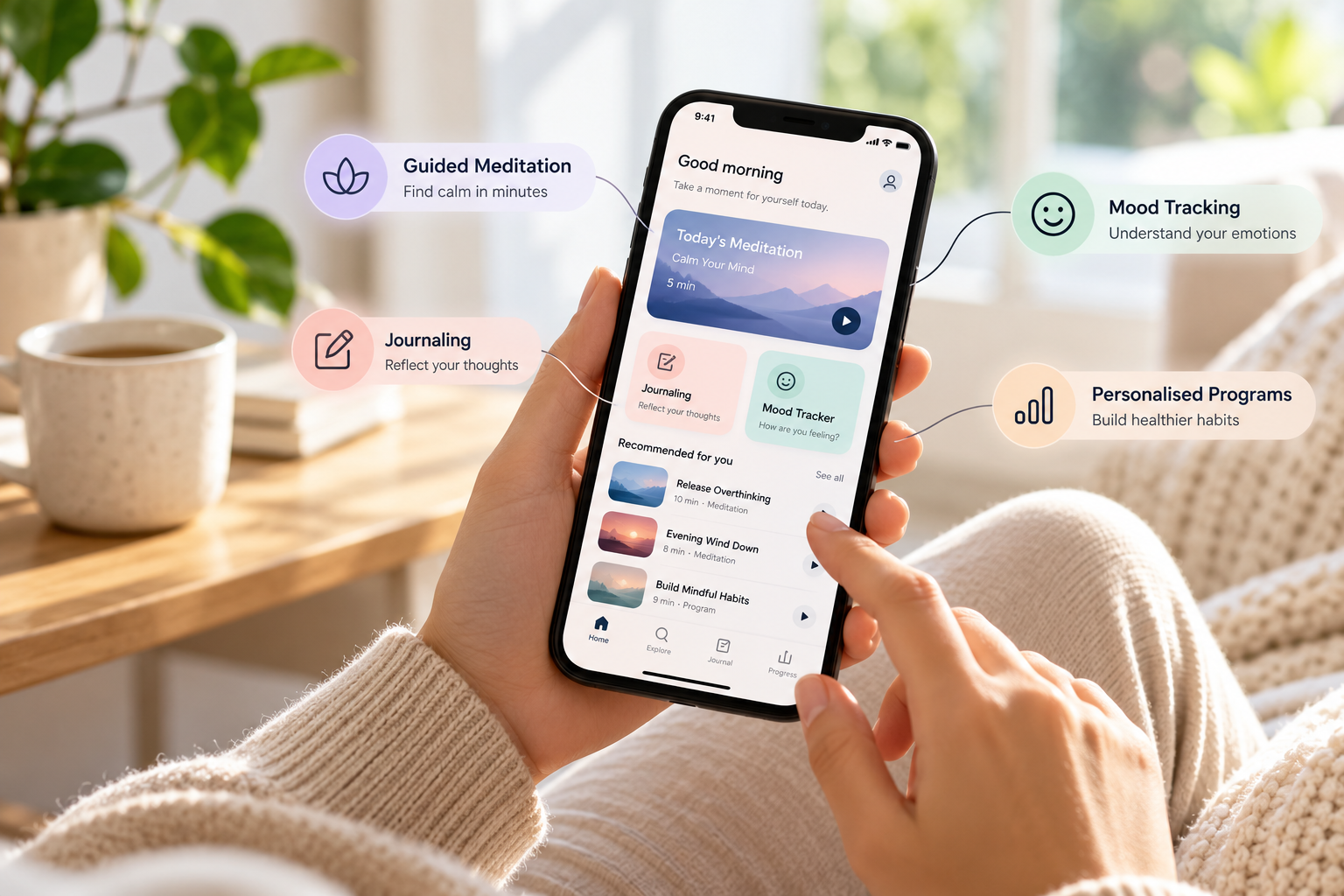
Inside brings together guided meditation, journaling, mood tracking, and structured multi-day programs, giving you different ways to support your emotional well-being within one app.
Rather than expecting every difficult moment to be solved through meditation alone, you can explore the practice that feels most relevant to what you're experiencing.
Explore Inside
If you're looking for a simple place to begin, Inside offers guided meditation, journaling, and mood tracking to help you build a routine around your well-being.
Explore Inside: For the published article, this CTA should use Inside's verified direct App Store download link.
How to Use Inside When You're Overthinking
You don't need to use every feature in Inside to get started.
In fact, if you're already overwhelmed, trying to build an elaborate routine may make things harder.
It can help to begin with the situation you're dealing with rather than following a strict schedule.
When You Can't Stop Replaying a Conversation
Let's say you had an uncomfortable interaction earlier in the day.
You know the conversation is over, but you keep thinking about what you should have said differently.
This might be a good moment to try journaling.
Write down what happened as you remember it, then explore what you're concerned about.
Are you worried that you upset someone? Is there something you'd like to clarify? Or are you trying to work out what another person was thinking without having enough information?
You may realize that there's a practical next step, such as having another conversation.
Or you may discover that you've been revisiting a situation you can't change.
Either way, writing gives you an opportunity to examine the concern more deliberately.
When Your Mind Won't Settle Before Bed
You've finished your responsibilities for the day, but your thoughts keep moving.
You remember unfinished work, worry about tomorrow, and begin questioning decisions that seemed perfectly reasonable earlier.
Instead of searching for answers to every concern, you could try a short guided meditation in Inside.
You don't need to expect immediate relaxation.
Simply follow the guidance and practice bringing your attention back when it wanders.
If something genuinely needs your attention tomorrow, write it down before returning to your evening.
The goal isn't to make your mind completely silent. It's to create a little distance from the constant urge to think everything through.
When You Feel Overwhelmed but Don't Know Why
Not every difficult feeling has an obvious explanation.
You might feel irritable, distracted, or unusually sensitive without knowing what's behind it.
Rather than immediately searching for a reason, try recording how you're feeling.
Over time, mood tracking may help you notice whether certain situations tend to coincide with these experiences.
You might also use journaling to explore what's been happening recently.
Sometimes you'll recognise a pattern. Other times, you won't find a clear explanation, and that's okay too.
You don't need to turn every emotion into a problem that requires solving.
What Makes an App Worth Keeping on Your Phone?
The real test of an app isn't how impressive it looks when you first download it.
It's whether you find yourself returning to it.
A meditation library may sound useful, but if the sessions feel too long or difficult to follow, you probably won't use it regularly.
A journaling feature might offer plenty of options, but if writing feels like homework, it may not become part of your routine.
Before choosing an app, think about three things.
First, does it feel easy to start? On a difficult day, you may not want to spend ten minutes deciding what to do. The easier it is to begin a practice, the more approachable it may feel.
Second, does it fit the way you prefer to reflect? Some people enjoy listening to guidance. Others prefer writing or reviewing their moods. You don't have to choose a method simply because it's popular.
Finally, can you use it without putting pressure on yourself? Missing a meditation or forgetting to journal shouldn't make you feel as though you've failed.
It's also worth reviewing the app's privacy policy, subscription terms and available features before downloading, particularly if you plan to record personal thoughts or emotional experiences.
An app should support your life, not demand that you organise your life around it.

A Simple Seven-Day Routine to Try
If you're unsure how to begin, try keeping things small for one week.
On the first day, spend a few minutes exploring guided meditation. Notice whether you prefer listening to instructions or sitting quietly with your own thoughts.
The following day, write a short journal entry about something that's been occupying your mind. Don't worry about grammar or making it sound meaningful.
Later in the week, record how you're feeling and think about what your day has been like.
As the week continues, return to whichever practice feels most useful.
You might discover that meditation suits your evenings while journaling works better after stressful conversations.
Or you may prefer a simple mood check-in because it takes less time.
There's no need to complete every activity every day.
The purpose of trying different practices is to understand what fits you, not to create another schedule you have to maintain.
If you enjoy having more direction, Inside's multi-day programs offer another way to explore a structured routine.
Will an Overthinking App Actually Help?
This is worth asking before downloading any mental wellness app.
Overthinking isn't a single medical condition, and people experience repetitive thoughts for different reasons.
For some, it happens mainly during stressful periods. For others, persistent worry or rumination may be connected with anxiety, depression, or other mental health concerns.
Meditation and journaling can support emotional awareness and coping, but results vary. An app can't guarantee that you'll stop overthinking, sleep better, or feel calm every time you use it.
It also can't resolve practical problems that require action, such as an unhealthy working environment, ongoing financial difficulties, or relationship conflict.
If repetitive thoughts are regularly interfering with your sleep, concentration, relationships, or daily life, consider speaking with a qualified mental health professional.
An app can be part of your well-being routine without needing to be the entire solution.
Start With What You Need Today
You don't need to become someone who meditates for an hour every morning or writes pages in a journal every evening.
Maybe all you need today is five minutes to step away from a busy mind.
Maybe there's a conversation you've been replaying, and writing it down would help you understand why it's bothering you.
Or perhaps you've been feeling overwhelmed lately and want to pay more attention to your moods.
Inside gives you a place to explore these practices without needing to choose between meditation, journaling, and mood tracking.
Start with one small activity. See how it feels. Return to it when it's useful.
The aim isn't to become a person who never overthinks. It's to find healthier ways of responding when your thoughts begin taking up more space than you'd like.
Explore Inside and find a practice that works for you.
Frequently Asked Questions
Is there an app specifically for people who overthink?
There are apps designed around meditation, journaling, mood tracking, and anxiety self-help, all of which may be relevant to someone who overthinks. Inside combines guided meditation, journaling, mood tracking, and multi-day programs. Which approach suits you depends on whether you want to practise mindfulness, reflect on your thoughts, or better understand your moods.
I keep replaying conversations. Would journaling help?
It might. Writing down what happened can make it easier to separate the conversation itself from what you're imagining the other person thought. If you find yourself writing the same worries repeatedly without gaining any clarity, try stepping away rather than continuing to analyze them.
Do I have to meditate every day to notice a difference?
No. Consistency can help you become familiar with meditation, but there's no need to force yourself into a schedule you can't maintain. Start with a few minutes when you have time. You can gradually explore a routine that feels comfortable.
What if I don't enjoy meditation?
You don't have to rely on it. Journaling or mood tracking may feel more natural to you. Some people also prefer physical activities, spending time outdoors, or talking through their concerns. The best approach is one that suits your needs and doesn't create additional pressure.
Can I use Inside before going to sleep?
You can explore Inside's guided meditation or journaling features as part of an evening routine. For example, you might write down tomorrow's tasks or listen to a meditation before bed. These practices may help some people wind down, but they aren't guaranteed treatments for insomnia.