
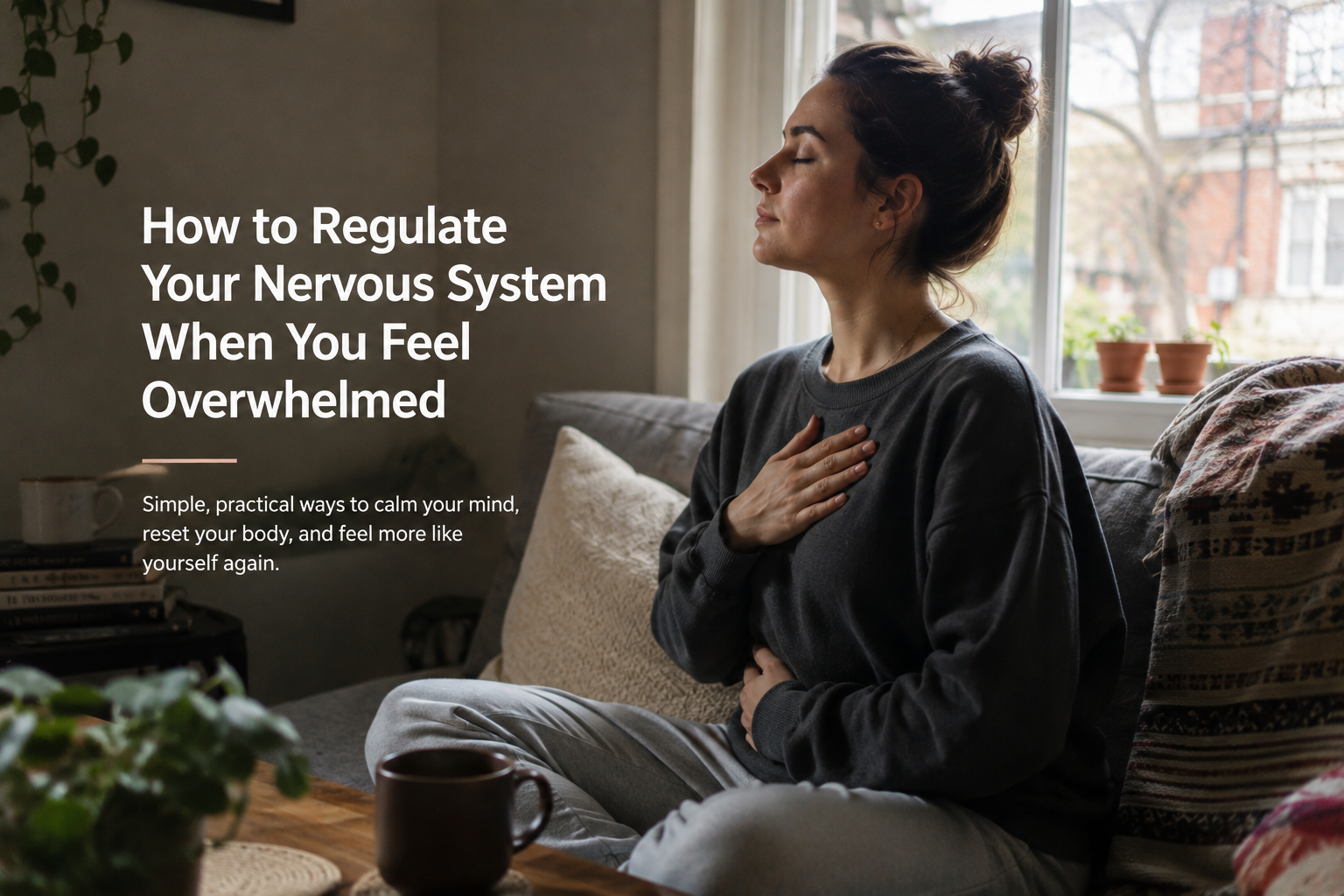
There are days when even small things feel unusually difficult. A message you normally answer in seconds sits unread. Your mind jumps between unfinished tasks, conversations, worries, and things that have not even happened yet. You may feel restless and unable to focus, or you may have the opposite reaction and want to shut everything out.
Stress does not exist only in our thoughts. The body responds too. During a stress response, heart rate and breathing can increase, muscles may tense, and the body becomes more prepared to respond to a perceived challenge. This is part of the body's normal stress response, not necessarily a sign that something is wrong.
The difficulty comes when you feel overwhelmed and cannot easily settle again. At those moments, being told to “just relax” is rarely useful. What can be more helpful is learning to notice what is happening, reconnect with the present moment, and develop small practices that help you respond to stress differently.
That is the practical idea behind nervous system regulation.
What Does Nervous System Regulation Actually Mean?
The nervous system helps coordinate how the body responds to what is happening around and within us. Part of this system is involved in the familiar “fight-or-flight” response. When the brain perceives stress or threat, the body can prepare for action through changes such as increased heart rate, faster breathing, muscle tension, and the release of stress hormones.
This response is useful. If you were genuinely in danger, you would want your body to react quickly.
But the things that trigger stress in everyday life are not always physical dangers. Deadlines, relationship problems, uncertainty, financial pressure, lack of sleep, constant notifications, difficult conversations, and an overloaded schedule can all contribute to feeling stressed.
This is why “regulating your nervous system” should not be understood as switching stress off. Stress is a normal human response. A more realistic goal is learning how to recognize when you are becoming overwhelmed and developing ways to return to a state where you feel more present, settled, and able to decide what to do next.
What Emotional Overwhelm Can Feel Like
Overwhelm does not look the same for everyone.
For some people, it feels like mental noise. Thoughts move quickly, concentration becomes difficult, and every unfinished task suddenly seems equally urgent. You may repeatedly check your phone, move from one task to another without finishing anything, or replay the same conversation in your head.
For someone else, overwhelm may feel like withdrawal. You might postpone decisions, ignore messages, lose motivation, or feel as though even simple tasks require more energy than you have available.
There can also be physical signs of stress. Muscle tension, changes in breathing, sweating, difficulty sleeping, headaches, and digestive symptoms can occur when people are under stress.
The important point is that you do not have to wait until everything feels unmanageable before paying attention. Learning to recognize your own early signs of stress can make it easier to respond before the feeling builds.
How to Regulate Your Nervous System When You Feel Overwhelmed
There is no single technique that works for everyone, and nervous system regulation should not become another wellness task you feel pressured to perform correctly.
A better approach is to experiment with simple practices and notice which ones genuinely help you feel more grounded.
1. Start by Naming What You Are Feeling
When several emotions arrive at once, they can merge into one large feeling: I can't deal with this.
Before trying to make that feeling disappear, spend a moment identifying what is actually there.
Are you anxious about something that might happen? Frustrated by something that already happened? Mentally exhausted? Lonely? Disappointed? Overstimulated? Or simply unsure of what you feel?
You do not need to analyze yourself for twenty minutes. Even a simple observation such as, “I feel overwhelmed because I have too many things competing for my attention,” can make the situation more specific.
The World Health Organization includes “notice and name” among its practical stress-management skills. Noticing difficult thoughts and feelings can create some distance from them and give us more room to choose how to respond.
This is also why emotional check-ins can be useful. The aim is not to judge whether your mood is good or bad. It is to become more familiar with your internal state.
2. Bring Your Attention Back to the Present
Overwhelm often pulls attention in several directions at once. Your body may be sitting at your desk while your mind is replaying yesterday, worrying about tomorrow, and trying to solve three things at the same time.
Grounding practices bring some of that attention back to what is happening now.
You might notice the pressure of your feet against the floor, the support of the chair beneath you, the temperature of the room, or sounds you can hear around you. You can also gently stretch your arms, release your hands, or notice where you are holding unnecessary tension.
WHO's stress-management guidance includes grounding practices such as slowing down, pressing the feet into the floor, stretching, and deliberately paying attention to the present experience.
Grounding does not remove the situation that caused your stress. It gives your attention somewhere more stable to return to while you decide how to handle it.
3. Reduce the Amount of Input for a Few Minutes
Sometimes overwhelm isn't caused by one big thing. It's the accumulation of twenty smaller things, all asking for your attention at once.
You're in the middle of a conversation while notifications keep appearing on your phone. Music is playing in the background, several browser tabs are open, and you suddenly remember an email you haven't replied to. Then you open social media for a quick break and, without really meaning to, give your mind even more information to process.
When you're already feeling overwhelmed, more input rarely helps. Even things that normally feel harmless can become exhausting when your attention is already stretched thin.
Try giving yourself a few minutes with less going on. Put your phone face down, silence notifications that can wait, close the tabs you aren't using, or step away from the screen altogether. If you can, move somewhere a little quieter and allow your attention to settle.
This isn't about ignoring your responsibilities or shutting yourself away from everything. It's simply about creating enough mental space to work out what actually needs your attention—and what can wait.
4. Release Some of the Physical Tension
When people are stressed, the body can become tense without them noticing it. The jaw tightens, shoulders rise, hands clench, or breathing changes.
Take a moment to check where you are holding tension.
You might consciously relax your jaw, lower your shoulders, loosen your hands, stretch, or slowly release tension from different muscle groups.
Progressive muscle relaxation is an established relaxation technique that involves intentionally tensing and then releasing different muscles. Relaxation practices are designed to encourage the body's relaxation response, although evidence for their usefulness varies depending on the condition and technique.
You do not need to transform from highly stressed to completely calm. A smaller shift is still useful. Feeling slightly less tense may make the next decision easier.
5. Give It a Shot If Your Mind Needs Guidance
The popular perception of meditation seems like sitting down and becoming peaceful.
But this is not what it’s like for everybody, particularly for those whose minds are already engaged.
If sitting quietly is too distracting and sends you running after each thought that pops up, a guided meditation may offer a more defined point of focus. Rather than determining what to do, you are being guided through it for a few moments by something else.
The research into meditation and mindfulness is complex. Mindfulness interventions seem to help with reducing symptoms of stress and anxiety, but their effectiveness varies, and meditation cannot be sold as a cure for anxiety disorders.
In case of daily overburdening, the aim can be less sophisticated: create moments when you are not dealing with any problems, answering the notifications, planning ahead, or rethinking past experiences.
You are giving your attention somewhere to go.
6. Put Racing Thoughts Somewhere Outside Your Head
Sometimes overwhelm continues because your mind is trying to hold too much information at once.
You need to remember something tomorrow. There is a conversation you want to revisit. You have three tasks you cannot forget. Something upset you earlier, but you have not really processed why.
Writing can give those thoughts somewhere else to go.
You do not need to keep a beautiful journal or write several pages every night. Start with a few practical prompts:
What feels heaviest right now?
What actually needs my attention today?
What can wait until tomorrow?
Is there something I am trying to solve that I cannot control right now?
What would make the next hour feel slightly easier?
The point is not to produce profound answers. It is to separate thoughts that have become tangled together.
For someone who tends to overthink, that distinction can matter. A thought written down no longer has to be repeatedly rehearsed simply because you are afraid of forgetting it.
7. Track Patterns Instead of Judging Individual Days
One difficult day does not necessarily tell you very much.
Patterns do.
If you regularly check in with your mood, you may eventually notice that overwhelm tends to appear in certain situations. Perhaps you feel more anxious after sleeping poorly. Maybe Sunday evenings are consistently difficult. Perhaps particular environments leave you overstimulated, or you notice that your mood changes after certain interactions.
This is where mood tracking becomes more useful than simply labeling a day as “good” or “bad.”
Try recording what you feel along with a small amount of context: your energy, sleep, major events, stress level, or anything else that seems relevant.
Over time, those check-ins can help you understand your emotional patterns and recognize what tends to support—or disrupt—your sense of balance.
8. Ask: What Is the Next Thing, Not Everything?
When you are overwhelmed, the mind can turn several separate problems into one conclusion:
Everything is too much.
Try breaking “everything” apart.
What genuinely needs to happen next?
Maybe you need to answer one important email rather than clear your entire inbox. Maybe you need to prepare for tomorrow rather than solve the rest of the week. Maybe the next useful action is eating, showering, taking a walk, or going to bed rather than continuing to push through exhaustion.
And sometimes the answer is that nothing needs to be solved immediately.
Reducing the size of the problem can reduce the pressure to resolve your entire life in one sitting.
Build a Routine You Can Use in Real Life
A regulation routine only helps if you can actually use it.
You do not need a perfect morning routine, an hour of meditation, twenty pages of journaling, or an elaborate wellness ritual every time you become stressed.
A realistic reset might take five minutes:
- Check in: What am I feeling right now?
- Ground: Notice your body and surroundings.
- Reduce: Remove unnecessary stimulation for a few minutes.
- Reset: Follow a short meditation or relaxation practice.
- Reflect: Write down what feels important.
- Choose: Decide on one useful next step.
WHO's stress-management guidance similarly emphasizes that practical stress-management skills can be practiced for just a few minutes each day.
Consistency matters more than creating an impressive routine that you cannot maintain.
.svg)

Nervous System Regulation Is Not About Being Calm All the Time
This distinction is important.
The goal is not to eliminate stress, anxiety, sadness, frustration, or other uncomfortable emotions. Feeling difficult emotions is part of being human, and occasional stress is a normal response to life's challenges.
Regulation is better understood as developing a wider range of ways to respond.
Sometimes you may need grounding. Sometimes movement helps. Sometimes you need quiet. Sometimes you need to talk to someone. Sometimes journaling helps you understand what is happening. And sometimes a problem needs practical action rather than another meditation.
It is also important not to turn self-help into self-blame. If a technique does not make you feel calm, that does not mean you performed it incorrectly.
If stress or anxiety is persistent, severe, interfering with daily life, or becoming difficult to manage, self-guided practices and wellness apps should not replace professional support. NCCIH similarly advises against using relaxation practices as a substitute for conventional care when medical or mental health care is needed.
How Inside Can Help You Build a Daily Reset
Knowing what might help is one thing. Remembering to use it when your mind is already overloaded is another.
Inside is designed to give that process more structure.
Rather than offering only individual meditation sessions, Inside combines guided meditations, structured programs, mood tracking, and journaling in one place.
Its programs take you through guided 9 to 10 day journeys with daily meditations focused on specific emotional challenges. The idea is to make practices like meditation and reflection something you can return to regularly instead of just when life becomes overwhelming.
Mood tracking can help you notice how your emotional state changes over time. Journaling gives you space to think about what might be influencing those changes. Guided sessions provide a starting point when you don’t want to figure everything out on your own.
Inside is not about being calm every minute of the day.
It is about finding small ways to reconnect with yourself when you need to.
Final Thoughts
Learning how to regulate your nervous system when you feel overwhelmed does not mean learning how to switch off every difficult emotion.
It means becoming more aware of what stress feels like for you and having a few reliable ways to respond.
Start small. Notice what you are feeling. Come back to your body and surroundings. Reduce unnecessary stimulation. Write down what your mind is trying to hold. Try a guided practice when you need direction. Pay attention to patterns rather than judging individual days.
You do not have to solve everything before you can feel a little steadier.
Sometimes the most useful question is simply:
What would help me feel more grounded in the next five minutes?
Frequently Asked Questions
What does it mean to regulate your nervous system?
In everyday wellness language, nervous system regulation generally refers to practices that help you respond to stress and return toward a calmer, more manageable state. It does not mean permanently eliminating the body's stress response, which is a normal and useful biological process.
How can I calm myself when I feel overwhelmed?
Start by reducing the number of things demanding your attention. Notice what you are feeling, reconnect with your physical surroundings, release unnecessary muscle tension, and identify one manageable next step. Grounding, relaxation practices, journaling, or guided meditation may also be useful for some people.
Can meditation help with nervous system regulation?
Meditation and mindfulness practices may help some people manage stress and anxiety-related symptoms, although research results vary. They are best viewed as supportive practices rather than guaranteed treatments for anxiety or other health conditions.
How long does it take to regulate your nervous system?
There is no universal timeframe. Stress responses, circumstances, and the techniques people find useful differ from person to person. Some practices may help someone feel more settled within minutes, while building greater awareness and more consistent coping habits usually takes repeated practice.
Can mood tracking help with emotional overwhelm?
Mood tracking can help you record how you feel and notice patterns over time. When combined with context—such as sleep, stressful events, energy, or daily experiences—it can make recurring emotional patterns easier to recognize.



.png)


.png)