

Anxiety has a way of making everything feel urgent at once. A message you have not answered, tomorrow's workload, something awkward you said earlier, a decision you still need to make—suddenly they all seem to demand your attention at the same time.
Sometimes you know exactly what has made you anxious. Other times, you simply notice that you are tense, distracted, or unable to settle. Your thoughts may be moving quickly while your body feels restless, and telling yourself to "just calm down" rarely makes much difference.
If you are searching for how to calm anxiety, it helps to know that there is no single technique that works for everyone or in every situation. What helps when your mind is racing at night may be different from what helps during a stressful afternoon at work.
The aim is not to force yourself to feel completely calm within five minutes. It is to give your mind and body a little less to deal with, then work from there.
Here are ten practical things you can try when anxiety starts to feel overwhelming.
1. Stop Trying to Solve Everything at Once
An anxious mind often jumps ahead.
You are not only thinking about the problem in front of you. You are thinking about what it might mean tomorrow, how somebody else might react, what could happen next week, and what you will do if everything goes wrong.
Before long, one concern has turned into five imagined problems.
Try bringing the situation back to what is actually happening now. Ask yourself, "What needs my attention in the next ten minutes?"
Maybe the answer is sending one email. Perhaps you need to finish the task already in front of you. Or maybe there is genuinely nothing you need to do right now.
This does not mean ignoring real problems. It simply means dealing with the part of the problem that exists today rather than trying to mentally live through every possible future version of it.
2. Give Your Attention Something Concrete
When anxiety takes over, your attention can become very narrow. You keep returning to the same thought, checking the same feeling or replaying the same possibility.
Sometimes it helps to deliberately notice something outside that loop.
Look around the room. Notice what you can hear. Feel your feet against the floor or the chair supporting your body. If you are outside, pay attention to the temperature, the movement around you, or something in the distance.
You do not need to turn this into a complicated exercise. The purpose is simply to remind your attention that more is happening in the present moment than the thought currently occupying your mind.
Mindfulness and relaxation practices use this kind of present-moment attention, and the NHS includes mindfulness, meditation, and relaxation among approaches that some people find helpful for anxiety.
3. Put the Worry on Paper
Some thoughts become louder simply because we keep carrying them around.
You remind yourself not to forget something, think through tomorrow's schedule, replay a conversation, and then return to the original worry. It can feel as though your mind has twenty tabs open and none of them will close.
Writing can create some distance.
Do not worry about keeping a perfect journal. Start with:
"What is taking up space in my mind right now?"
Then write whatever comes up.
You might end up with a mixture of serious worries and ordinary tasks: money, an unanswered message, tomorrow's meeting, groceries, a relationship concern, or something you need to book.
Once those thoughts are visible, ask yourself which ones you can actually do something about.
A journal can also help you notice patterns over time—what tends to make anxiety worse, what helps, and whether the same worries keep returning. Both the NHS and Mayo Clinic suggest keeping a diary or journal as one way to better understand anxiety and stress patterns.
4. Move, Even If You Do Not Feel Like Exercising
When people hear that exercise can help with stress, it can sound like another task to add to an already overwhelming day.
It does not have to mean going to the gym.
If you have been sitting at your desk for three hours thinking about the same problem, take a short walk. Stretch while the kettle boils. Step outside for a few minutes. Put some music on and move around while you tidy the room.
The important part is changing what your body is doing.
Regular physical activity is commonly recommended as part of managing anxiety and stress. Mayo Clinic describes exercise as a stress reducer that may also support mood and general health.
A walk will not make a difficult situation disappear, but sometimes you return to the situation with a little more space around it.
5. Notice Whether Caffeine Is Adding to the Feeling
There are days when coffee feels essential, especially after a poor night's sleep. Unfortunately, those can also be the days when you are more likely to notice its stimulating effects.
Caffeine affects everyone differently. For some people, several cups barely seem noticeable. For others, too much can leave them jittery, restless, or unusually aware of their heartbeat.
If you have been feeling more anxious than usual, think about whether your caffeine intake has changed too.
You do not necessarily need to stop drinking coffee altogether. Pay attention to the pattern first. Do you tend to feel more unsettled after your second or third cup? Are you drinking caffeine later because you are tired, then struggling to sleep?
Mayo Clinic notes that caffeine can worsen anxiety for some people and recommends reducing caffeinated drinks as one possible lifestyle measure.
Sometimes a small adjustment tells you more than trying to guess what is happening.
6. Take a Break From Constant Input
Anxiety does not always come from one major event. Sometimes your mind is simply full.
Think about how much information you take in during an ordinary day. Messages arrive while you work. You check social media during breaks. A podcast plays while you cook. You read the news, answer another notification, and watch something while getting ready for bed.
There is very little space in between.
If you already feel overwhelmed, adding more information can make it difficult to settle.
Try taking a short period without new input. Put your phone somewhere else while you make lunch. Walk without headphones. Sit outside for ten minutes without scrolling.
It may feel strange at first, particularly if reaching for your phone has become automatic.
You are not trying to create a perfectly silent lifestyle. You are simply giving your mind a chance to finish processing what is already there before adding something else.
7. Separate What You Can Control From What You Cannot
A lot of anxiety lives in unanswered questions.
What if they say no?
What if the meeting goes badly?
What if I made the wrong decision?
What if things do not work out?
Your mind may keep returning to these questions because it believes enough thinking will eventually produce certainty. Often, it cannot.
Take the situation you are worried about and divide it into two parts: what is within your control and what is not.
You may be able to prepare properly for the meeting, but you cannot control exactly how somebody else responds. You can send a thoughtful message, but you cannot control when the person replies. You can make the best decision with the information available, but you cannot guarantee the outcome.
Put your energy into the first category.
The second category may still feel uncomfortable, but repeatedly thinking about something outside your control does not necessarily make you better prepared for it.
8. Talk to Someone Without Needing Them to Fix It
Anxiety can become much louder when everything stays inside your own head.
Talking to somebody you trust can help, even if they cannot change the situation. Sometimes hearing yourself explain what is worrying you makes the problem feel clearer. Sometimes another person notices that you are assuming the worst. And sometimes you simply need someone to listen.
You do not always need advice.
You can even say, "I don't need you to solve this. I just need to talk it through."
Connection matters because anxiety can encourage withdrawal. You may cancel plans, stop replying or convince yourself that you need to feel better before being around anyone.
Support from trusted friends or family can be part of coping with anxiety, alongside professional care when it is needed. NIMH specifically recommends communicating with people you trust and seeking professional help when anxiety begins interfering with everyday life.
9. Pay Attention to Sleep Before Trying Another Productivity Hack
When life feels overwhelming, sleep is often one of the first things we borrow time from.
You stay up to finish something. Then you scroll because you need time to unwind. The next morning you rely on more caffeine to get going, and by evening you are exhausted but strangely unable to switch off.
A few nights like that can change how manageable everyday stress feels.
If anxiety has been stronger lately, look at your sleep honestly. Are you giving yourself enough time to rest? Is work following you into bed through your phone? Are you lying down physically tired while your mind is still halfway through the day?
Making sleep a priority is among the lifestyle measures recommended by both NIMH and Mayo Clinic for people dealing with anxiety.
You do not need a perfect nighttime routine. Start with one realistic change. Put work away earlier. Write tomorrow's tasks down before getting into bed. Move your phone away from your pillow.
Small changes are easier to repeat than an elaborate routine you abandon after three nights.
10. Stop Expecting Yourself to Feel Calm All the Time
This one is easy to overlook.
Sometimes we become anxious about being anxious.
You notice the feeling and immediately think, "Why am I like this today?" Then you monitor whether it is getting better. Ten minutes later, you check again. When the anxiety is still there, you become frustrated that whatever you tried did not work.
Now you are dealing with the original anxiety and your reaction to having it.
It can be more helpful to think in smaller terms.
Instead of asking, "How do I make this anxiety disappear?" ask, "What would make the next half hour a little easier?"
Maybe you need to eat something. Maybe you need to leave your desk, call someone, write down what is bothering you or simply stop expecting yourself to solve a complicated problem tonight.
Feeling calmer does not always happen all at once.
How Do You Calm Anxiety at Night?
Anxiety can feel different at night because many of the distractions that kept your attention occupied during the day disappear.
You finally lie down, and your mind starts reviewing everything. A conversation from the morning comes back. Then tomorrow's responsibilities. Then something completely unrelated that you have not thought about in months.
Trying to force yourself not to think usually does not help much.
Instead, give your mind somewhere to put unfinished business before bed. Write tomorrow's tasks down. If there is something you cannot solve tonight, acknowledge it and decide when you will return to it.
It can also help to make the last part of your evening less stimulating. That might mean stepping away from work, dimming the amount of information coming through your phone, or choosing a quieter activity before sleep.
If anxiety and sleep problems are regularly affecting each other, it is worth discussing them with a healthcare or mental health professional rather than assuming you simply need a better bedtime routine.
Can Meditation Calm Anxiety?
Meditation can be useful, but it helps to be realistic about what it is for.
A guided meditation does not have to remove every anxious thought to be worthwhile. Sometimes the useful part is simply noticing a thought without immediately following it into another ten minutes of worry.
You might notice, "I'm thinking about tomorrow again," and bring your attention back to the meditation. A few seconds later, your mind wanders again. You return again.
That repeated return is part of the practice.
Meditation and mindfulness are among the stress-management approaches that NIMH and other health organizations say may help reduce anxiety symptoms for some people. They are supportive tools, not replacements for professional treatment when treatment is needed.
And meditation will not suit every moment. If sitting quietly makes you feel more uncomfortable, you might prefer walking, journaling, stretching, or talking to someone.
There is no prize for choosing the most "mindful" option. Choose what genuinely helps.
How Inside Can Support You When Your Mind Feels Overwhelmed
One difficult thing about anxiety is that what helps can change from day to day.
Sometimes you need to get thoughts out of your head. Journaling can give them somewhere to go. On another day, you may not want to analyze anything else, and a guided meditation may feel more useful.
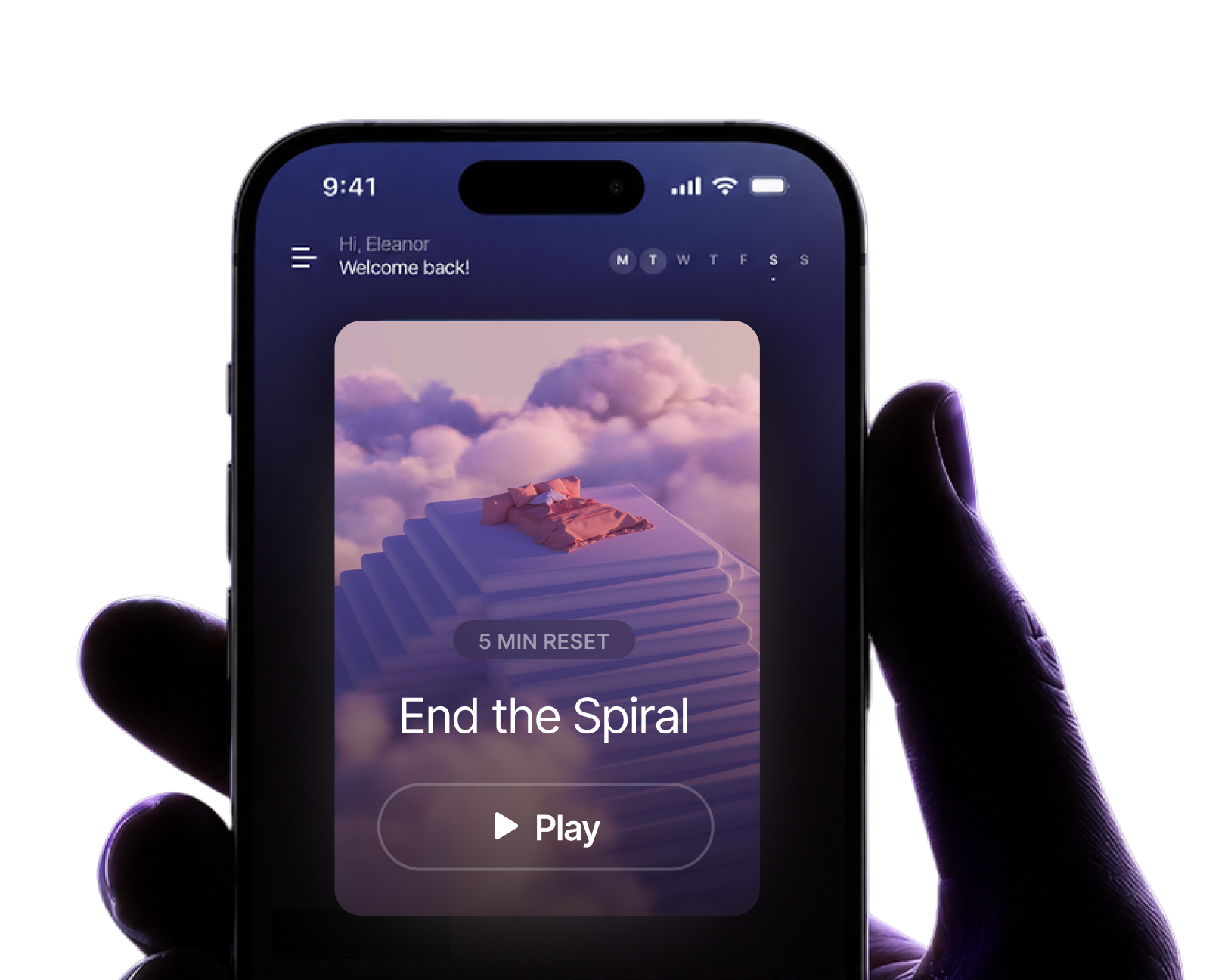
Inside brings journaling, guided meditation, mood tracking, and structured multi-day programs together so you can choose the kind of support that fits the moment.
Mood tracking can be particularly helpful when anxiety feels unpredictable. Over time, you may begin noticing connections between difficult days and things such as sleep, stress, routines, or particular situations.
Inside's structured programs also allow you to spend more time with areas such as anxiety, stress, overthinking, burnout, emotional overwhelm, and self-doubt rather than expecting one exercise to change everything.
You do not need to arrive feeling calm.
You can start with how you actually feel today.
.svg)
.png)
When Self-Help Is Not Enough
Practical coping strategies can be useful, but persistent anxiety deserves more than an endless search for another calming technique.
If anxiety regularly interferes with your work, relationships, sleep, or everyday activities, or you find yourself avoiding parts of life because of it, consider speaking with a qualified healthcare or mental health professional.
Evidence-based treatment for anxiety disorders can include psychotherapy, medication, or a combination depending on the individual. Cognitive behavioral therapy is one well-studied treatment used for generalized anxiety disorder.
Getting professional support does not mean the everyday things in this article stop mattering. Sleep, movement, journaling, supportive relationships, and relaxation practices can still have a place. They simply do not need to carry the entire responsibility.
If you are experiencing severe or concerning physical symptoms, seek appropriate medical care rather than assuming anxiety is the cause.
Final Thoughts
When anxiety feels overwhelming, it is natural to want one technique that switches it off.
Real life is usually less tidy than that.
You might find that walking helps one day and journaling helps another. Sometimes what you really need is sleep. Sometimes you need to talk to somebody. And occasionally the most useful thing is recognizing that the problem cannot be solved tonight.
Start small.
Ask yourself what would make the next part of your day slightly easier rather than demanding that you become completely calm.
Put one worry on paper. Step outside. Move your body. Reduce the amount of information coming at you. Check whether you are tired, hungry, or overloaded. Talk to someone you trust.
And if anxiety keeps returning or starts affecting how you live your life, seek professional support.
Managing anxiety is not about becoming a person who never feels worried or overwhelmed. It is about getting better at recognizing what you need when those feelings arrive.
Frequently Asked Questions
How can I calm anxiety quickly?
There is no technique that reliably removes anxiety immediately for everyone. You can try bringing your attention to your surroundings, taking a short walk, writing down what is worrying you, reducing stimulation, or talking with someone you trust. The aim can be to make the moment more manageable rather than forcing the feeling to disappear.
What can I do when I feel overwhelmed with anxiety?
Start by narrowing your attention to what actually needs to happen next. If several worries are competing for attention, write them down and separate what you can act on from what you cannot control right now.
Why is my anxiety worse at night?
For some people, worries become more noticeable when daytime distractions disappear. Unfinished thoughts about the day or tomorrow may become harder to ignore once things are quiet. A simple wind-down period and writing down unfinished tasks may help.
Can walking help with anxiety?
Physical activity is commonly recommended as one part of managing stress and anxiety. A walk also gives you a change of environment and can interrupt a period of sitting and repeatedly thinking about the same concern.
Can caffeine make anxiety worse?
Yes, caffeine can worsen anxiety for some people and may contribute to sensations such as jitteriness or nervousness. Individual sensitivity varies.
Does journaling help with anxiety?
Journaling can help you organize worries and notice patterns in what tends to trigger stress or what seems to help. It is one of several self-help strategies recommended by major health organizations.
Can meditation help calm an anxious mind?
Mindfulness and meditation may help some people manage anxiety by bringing attention back to the present and changing how they respond to anxious thoughts. They should be considered supportive practices rather than substitutes for needed professional care.
When should I get professional help for anxiety?
Consider seeking professional support if anxiety is persistent, difficult to control, and causes you to avoid everyday activities or begins interfering with work, relationships, sleep, or daily life.


.png)

.png)
.png)