
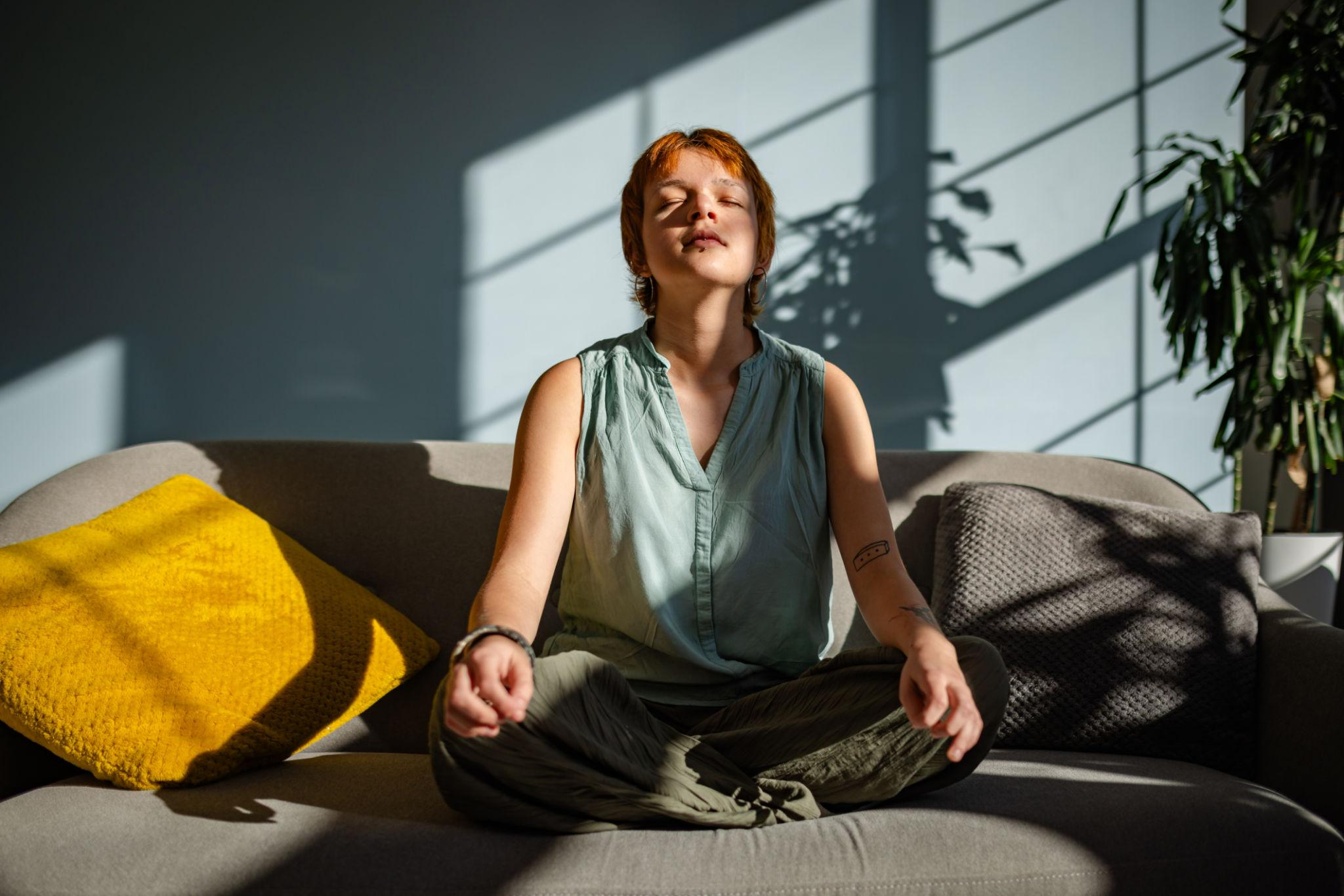
You turn off the lights, get comfortable, and finally have a moment to yourself. The day is over, and there is nothing urgent left to do. At least, nothing you can do right now.
Then your mind gets busy.
You remember an email you forgot to answer. You start thinking about tomorrow's meeting. A conversation from earlier suddenly feels awkward, even though you hadn't given it much thought at the time. Before long, you're mentally preparing for situations that may never happen.
You check the time. Twenty minutes have passed, and you feel more awake than when you got into bed.
Racing thoughts can be frustrating because they often appear when you're trying to relax. The harder you try to stop thinking, the more aware you become of everything running through your mind.
If this sounds familiar, a short meditation for racing thoughts may be worth trying. You don't need experience, a perfectly quiet room, or the ability to clear your mind. You simply need a few minutes to practice paying attention differently.
Why Does Your Mind Race When You Try to Relax?
During a busy day, your attention is pulled in several directions. You're answering messages, working, talking to people, making decisions, and moving between responsibilities.
When those distractions disappear, thoughts that were sitting in the background can become more noticeable.
You might suddenly remember unfinished tasks or start worrying about something you have been avoiding. Sometimes there isn't even a particular problem. Your thoughts simply keep moving from one subject to another.
Stress and anxiety can contribute to this experience. Poor sleep, caffeine, and an inconsistent routine may also make it harder to settle down.
For some people, racing thoughts happen occasionally after a demanding day. For others, they become a regular part of trying to fall asleep or relax.
One of the difficulties is that you may begin worrying about the thoughts themselves. You notice that your mind is busy, become frustrated that you cannot relax, and start wondering how long it will take before you finally feel calm.
Now you're thinking about the fact that you're thinking.
This is why trying to force your mind into silence can become another source of frustration.
Can Meditation Help With Racing Thoughts?
Meditation may help you change how you respond to racing thoughts, even when the thoughts themselves don't disappear immediately.
Imagine sitting beside a busy road. Cars continue passing, but you don't need to follow each one to see where it's going.
Meditation can help you practice something similar with your thoughts.
You notice a thought about tomorrow. Instead of planning the entire day, you recognize that you're thinking and return your attention to something simple, such as your breathing.
A few moments later, another thought appears. You notice that one too.
The practice isn't about preventing thoughts from arriving. It's about learning that you don't have to engage with every thought that appears.
This distinction matters, especially if you've tried meditation before and assumed you were doing it incorrectly because your mind wouldn't stay quiet.
A busy mind doesn't mean you've failed at meditation.
For beginners, guided meditation can be a helpful starting point because you have a voice to follow rather than trying to direct the entire practice yourself.
Try This Five-Minute Meditation When Your Mind Feels Busy
You can try this sitting on a chair, resting on the sofa, or lying comfortably in bed.
There's no need to create a special atmosphere. If closing your eyes feels comfortable, you can do that. Otherwise, simply lower your gaze.
Start by noticing where your body makes contact with the surface beneath you.
Feel the chair supporting your back or the mattress beneath your shoulders. Notice the weight of your hands and the position of your feet.
You don't need to change anything.
Now bring your attention to your breathing.
Notice the air moving in and out. There's no need to take unusually deep breaths or follow a particular breathing pattern. Let your breathing remain comfortable and natural.
After a few moments, your mind will probably wander.
Perhaps you'll remember something you need to do tomorrow. You might start replaying a conversation or wondering whether this meditation is working.
When you notice that happening, quietly acknowledge it.
You might say to yourself, "I'm thinking."
Then bring your attention back to the feeling of breathing.
You may need to do this many times. That's fine.
If concentrating on your breath feels uncomfortable, use another point of attention instead. You could notice the sounds around you, the weight of your body against the chair, or the feeling of your hands resting in your lap.
Continue for a few minutes without trying to judge how well you're doing.
When you're ready, notice the room around you again.
You may feel a little more settled. You may still have plenty on your mind. Either experience is okay.
The value of the practice is in giving yourself a chance to step away from automatically following every thought.
Prefer Someone to Guide You Through It?
When your thoughts are already moving quickly, even remembering what to do during meditation can feel like extra effort.
That's where guided meditation can be useful.
Rather than deciding where to place your attention, you can listen and follow along at your own pace.
Inside offers guided meditations alongside journaling, mood tracking, and structured multi-day programs designed to support everyday emotional well-being.
If you've been wanting to try meditation but haven't known where to begin, you can explore Inside and find a practice that fits into your day.
Try Guided Meditation With Inside
What If Your Thoughts Keep Coming Back?
They probably will.
You might finish a meditation feeling more settled, only to remember something stressful five minutes later. Or you may find that your mind continues wandering throughout the entire practice.
It's tempting to interpret this as evidence that meditation isn't working.
But expecting your thoughts to disappear can create the same struggle that made you want to meditate in the first place.
Instead of measuring success by how quiet your mind becomes, pay attention to whether you're beginning to recognize your thoughts earlier.
Perhaps you notice that you've started imagining an argument that hasn't happened. Maybe you catch yourself revisiting a decision you've already made.
Those moments of awareness can be useful.
They give you an opportunity to decide whether a thought needs your attention or whether you can return to what you're doing.
With practice, you may find it easier to notice repetitive thinking without becoming as involved in it. Progress is not always immediate or consistent, and meditation won't have the same effect for everyone.
When Racing Thoughts Are About Something You Actually Need to Do
Sometimes your mind keeps returning to a problem because there really is something unfinished.
You might need to pay a bill, prepare for an appointment, or have a conversation you've been putting off.
Meditation doesn't mean ignoring those responsibilities.
If a practical concern keeps interrupting your attention, write it down.
For example, instead of mentally repeating, "I need to remember to send that email," add it to tomorrow's task list.
If you're worried about a difficult conversation, you might write a few sentences about what you want to communicate.
The aim is to separate what needs action from what doesn't need to be solved right now.
Once you've made a note, you can remind yourself that you've given the concern somewhere to go.
You may still think about it again. But you don't have to keep mentally rehearsing the entire situation to make sure you remember it.
Making Meditation Part of Your Evening
If racing thoughts regularly appear at night, it may help to give yourself a little space between the demands of the day and the moment you try to sleep.
You don't need an elaborate bedtime routine.
For some people, ten minutes without work messages makes a difference. Others prefer reading, taking a warm shower, or writing down unfinished tasks before getting into bed.
You could also try a short guided meditation before turning out the lights.
The important part is finding something that feels manageable rather than creating another obligation.
If you're exhausted, a few minutes may be enough. If you miss a day, you can simply return to the practice the next evening.
Try not to judge the routine by whether you fall asleep immediately afterward. Meditation is not a guaranteed sleep treatment, and turning it into a test of how quickly you can relax may make the experience less helpful.
Instead, think of it as a small period when you don't have to plan, respond, or work anything out.
What About Racing Thoughts During the Day?
Racing thoughts don't always wait until bedtime.
You might notice them before a meeting, while waiting for an important reply, or when you're trying to concentrate on a task.
At those moments, a long meditation session may not be practical.
But you can still use the same principle.
Before responding to another thought, notice what you're doing.
Are you working on the task in front of you, or have you started imagining something that might happen later?
If your attention has wandered, gently return to the present activity.
You might feel your feet against the floor, look away from your screen for a moment, or take a short walk.
You don't need to make the thoughts disappear before continuing with your day.
Sometimes it's enough to recognize that your attention has drifted and choose where you'd like to place it next.


When Racing Thoughts Need More Support
Occasional racing thoughts are common, particularly during stressful periods. But if they regularly interfere with sleep, concentration, relationships, or everyday activities, it's worth speaking with a healthcare or mental health professional.
Persistent racing thoughts can occur for different reasons, and meditation alone may not address what's causing them.
If you experience racing thoughts alongside unusually high energy, a greatly reduced need for sleep, impulsive behavior, or significant changes in mood, seek professional assessment promptly.
Meditation and other self-care practices can support well-being, but they shouldn't replace appropriate care when symptoms are persistent, severe, or difficult to manage.
A Quieter Moment Is a Good Place to Start
You don't have to solve every thought that comes into your mind.
Some concerns deserve your attention. Some need a practical next step. Others are possibilities your mind has returned to several times without finding anything new.
Learning to recognize the difference takes practice.
If you've been struggling with racing thoughts, start small. Give yourself five minutes without expecting anything dramatic to happen. Notice your breathing, allow your thoughts to come and go, and return your attention whenever you realize it has wandered.
You can do that again tomorrow.
And if you'd prefer a little guidance, Inside gives you a place to explore meditation, journaling, and mood tracking as part of your everyday routine.
Explore Inside and Start Your Meditation Practice
Frequently Asked Questions
Why does my mind get so busy as soon as I lie down?
During the day, you're occupied with work, conversations, and other responsibilities. Once you're in bed, there's less competing for your attention, so unfinished tasks and worries can suddenly feel much louder. If this happens regularly, try writing down what's on your mind before bedtime rather than waiting until you're trying to sleep.
I've tried meditation, but I just end up thinking more. Am I doing something wrong?
Not necessarily. Sitting quietly can make you more aware of thoughts that were already there. You might spend the first few minutes thinking about dinner, tomorrow's plans, or something embarrassing you said years ago. That's normal. When you realise your attention has wandered, return to whatever you're focusing on. You don't have to start the meditation over.
Should I meditate before bed or earlier in the evening?
Try both and see what feels better. Some people enjoy meditating in bed, while others prefer doing it earlier so they aren't putting pressure on themselves to fall asleep. If bedtime meditation makes you more frustrated or alert, there's no reason to force it.
What if I can't sit still for even five minutes?
You don't have to. Start with a minute or two, or try a short meditation while sitting comfortably on the sofa. You can even practice noticing your surroundings during a quiet walk. Sitting perfectly still isn't a requirement for becoming more aware of your thoughts.
Is it better to meditate in silence or listen to someone guiding me?
If silence leaves you caught up in your thoughts, listening to a guided meditation may feel easier. Having someone gently direct your attention can give you something to return to when your mind wanders. Inside offers guided meditations you can explore if you'd rather not practice entirely on your own.
How do I know whether meditation is actually helping?
Don't judge it only by how relaxed you feel immediately afterward. Notice what happens during ordinary moments. Perhaps you catch yourself replaying a conversation sooner or find it a little easier to return to what you're doing after getting distracted. Those small changes can be meaningful, even if your mind still feels busy sometimes.